Выпуск
First Deorbit-as-a-Service Contract Awarded to Starfish Space
The Journal of Space Commerce Podcast · 1 февраля 2026 г. · 13 мин
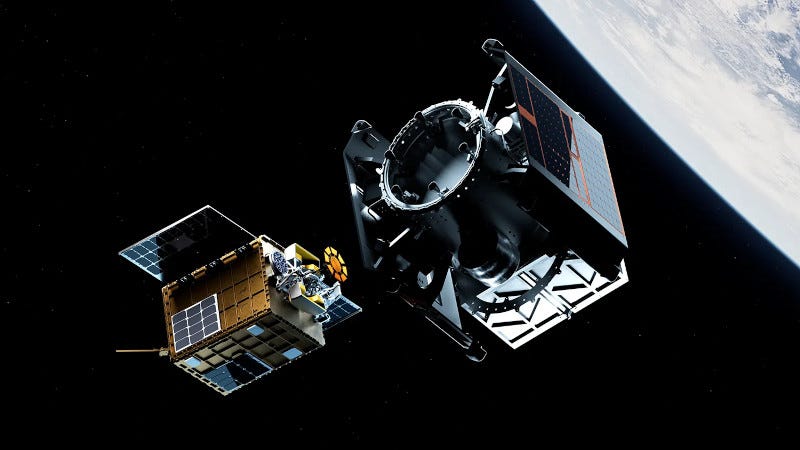
The U.S. Space Force Space Development Agency (SDA) has awarded a $52.5 million contract to Starfish Space to provide Deorbit-as-a-Service (DaaS) for satellites within the Proliferated Warfighter Space Architecture (PWSA). The award is the first such contracted mission for end-of-life satellite disposal service for any provider. Under the contract, Starfish Space will build, launch, and operate an Otter spacecraft in low Earth orbit (LEO) to safely and efficiently dispose of SDA satellites at the end of their operational lives. The mission begins with an initial deorbit, with options for multiple additional deorbits, enabled by Otter’s significant capacity and ability to service several satellites in a single mission. As LEO constellations continue to expand and require refresh cycles, operators must put more emphasis on managing end-of-life disposal safely, reliably, and at scale. Until now, operators have only had two options for managing end-of-life: actively deorbit satellites prematurely to mitigate risk of early failure and resulting operational hazards, or fly satellites for longer and contend with increasing debris and collision risks across their constellation. With Deorbit-as-a-Service, operators have a better alternative: maximize the operational life and value of their constellations and rely on vendors to dispose of any satellites which cannot dispose of themselves. The mission, which is targeting a 2027 launch date, will demonstrate how commercial Deorbit-as-a-Service can support both government and commercial constellation operators, maximizing the value and capabilities LEO operators can derive from their constellations as they continue to scale. ### In a related development, the European Space Agency (ESA) has awarded a contract valued at more than $475,000 to Astroscale UK to lead the design of the In-Orbit Refurbishment and Upgrading Service (IRUS). The novel mission concept is designed to lead to technology that will enable satellites to be upgraded, repaired, and extended while in orbit. This initiative supports ESA’s Space Safety Program, reinforcing Europe’s commitment to reducing orbital risks and ensuring safe operations for future generations. With the involvement of the spacecraft manufacturer and operator BAE Systems in the role of a future in-orbit servicing client, IRUS represents a major step towards a circular space economy, where satellites are maintained, repaired and enhanced in orbit rather than treated as single-use. Developing this new capability will pave the way for more complex In-Orbit Servicing, Assembly and Manufacturing (ISAM) capabilities – as refurbishment and upgrading are essential precursors to assembling and manufacturing platforms in space. The eight-month Phase A study contract will develop the technical groundwork and commercial case for in-orbit refurbishment and upgrading services. The team will explore how robotic and servicing technologies can safely connect with and refurbish satellites already in orbit, assessing the technical feasibility and commercial viability of upgrading a satellite or extending its life through replacing degraded or out-of-date subsystems such as batteries, solar panels and on-board computers. ### The Optical (laser) Satellite Communication Market is projected to grow from $620 million in 2025 to $1.56 billion by 2030 at a CAGR of 20.4%, according to a new report from MarketsandMarkets . The market is growing steadily, driven by a growing need for secure, high-capacity data links across space missions, defense applications, and commercial satellite networks