Выпуск
NASAs OIG Audits GRACE-C Mission, and Breaking the Germainium Stranglehold on Solar Cells
The Journal of Space Commerce Podcast · 27 сентября 2026 г. · 15 мин
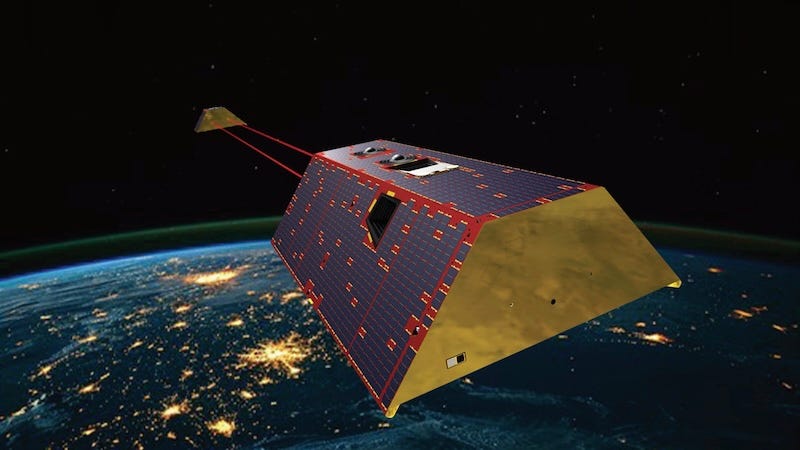
A NASA OIG audit released Wednesday found the GRACE-C gravity mission on track to launch within its $658 million baseline. But the project has already used most of its cost reserves. GRACE-C stands for Gravity Recovery and Climate Experiment-Continuity. NASA’s Jet Propulsion Laboratory, or JPL, manages the mission in partnership with the German Aerospace Center, known as DLR. The mission’s twin satellites will track changes in Earth’s gravity field to measure ice sheets, groundwater and sea levels. NASA’s Office of Inspector General found the project had spent 61.2 percent of its project-managed cost reserves as of May. After known risks were covered, only $13.6 million remained unallocated. That’s about 7 percent of remaining development costs, which is below JPL guidelines. In February, a JPL review group estimated the project could need $637.3 million to finish. That’s $9.3 million over its $628 million management agreement. The inspector general said its own calculations closely matched that estimate. In June, the group cut the projected overrun to $300,000. The inspector general said it didn’t independently verify that figure. The report cites two outside cost drivers. The first is overhead. JPL has gone through reorganizations and workforce reductions since 2024, mainly because of funding uncertainty around the Mars Sample Return mission. The resulting rate adjustments added about $4.6 million to GRACE-C’s cost, and the project expects another $13.3 million. The second is currency exposure. JPL’s firm-fixed-price contract with Airbus Defence and Space in Germany for the two satellites is priced at 150.5 million euros, or about $172.5 million. Smaller euro contracts cover laser work from Tesat-Spacecom in Germany and accelerometers from ONERA in France. NASA budgeted for an exchange rate of up to $1.10 per euro. The rate reached $1.14 in July, adding an estimated $8 million. About $60.6 million in contract payments are still due in euros. The project has kept all 163 days of its schedule margin. The inspector general said managers chose to spend reserves to protect that schedule. That includes $35.3 million to keep JPL’s share of the laser ranging interferometer on track. Two DLR-supplied subsystems are each running about four weeks late. NASA agreed with the first of the inspector general’s two recommendations, which calls for routine review of the project’s risk posture. It partially agreed with the second, which covers how requirements in partner agreements are written. That work has a target completion date of Jan. 29, 2027. Launch aboard a SpaceX Falcon 9 from Vandenberg Space Force Base in California is planned before July 2029. -0- Exolaunch has signed a contract with SpaceX to serve as payload integrator for a Starfall mission . The mission is targeted to launch on a Starship rocket in 2029. Starfall is a SpaceX spacecraft built for microgravity research, in-space manufacturing and return to Earth. Exolaunch already integrates and deploys satellites on SpaceX rideshare launches. This contract moves the company into a different line of business: helping customers fly experiments in orbit and bring them home. Exolaunch says it’ll offer the service to biotechnology and pharmaceutical companies, materials developers, government agencies and research institutions. Expected payloads include life-science experiments, advanced materials research, in-space manufacturing and technology demonstrations. While that all sounds good, no financial terms were disclosed, and no paying customers or specific payloads have been named. The 2029 date is a target, more than three years out. The contract also comes while Exolaunch is th