Выпуск
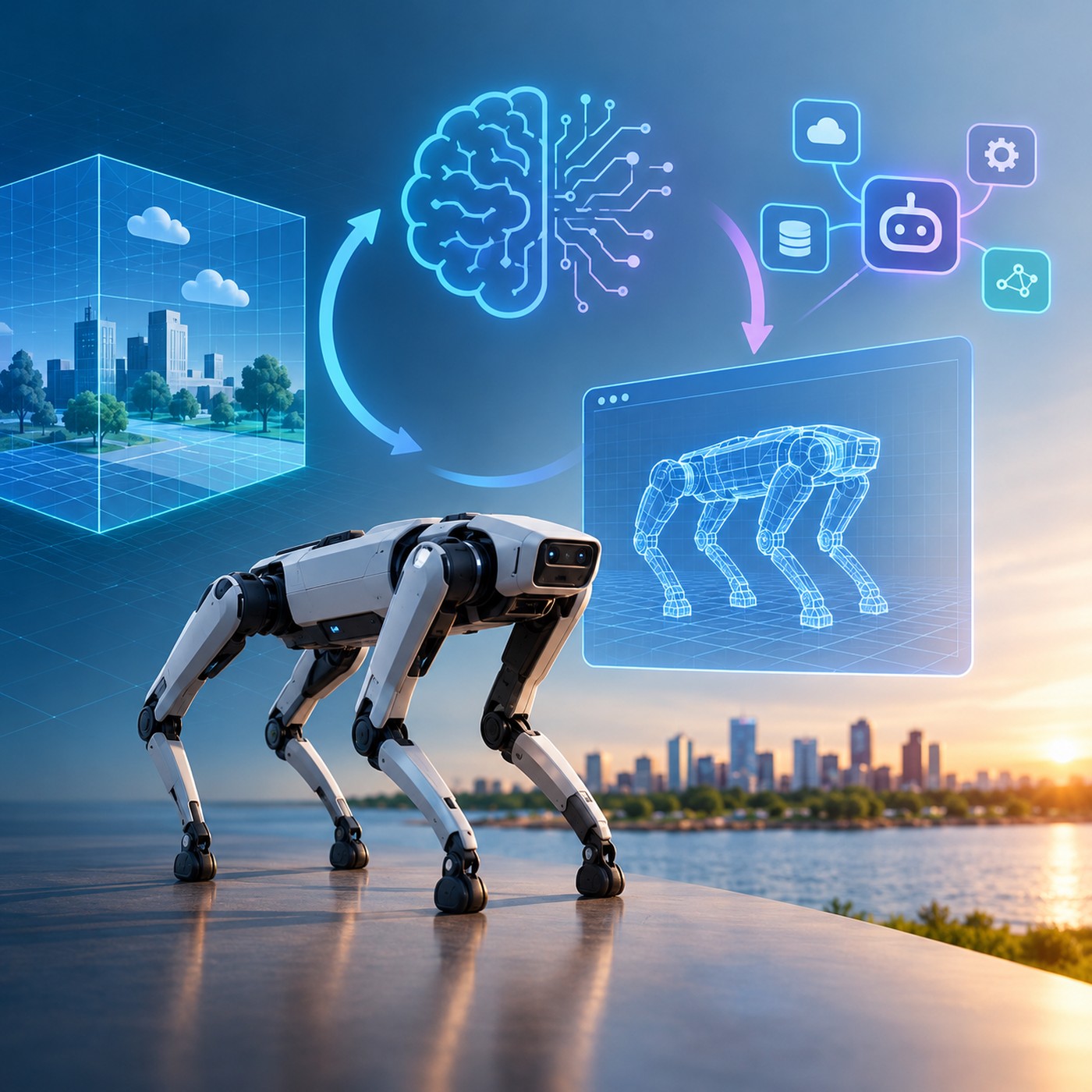
Episode #112: From the PC to the Robot Dog: How Do Normal People Get Through the Next Shift?
Stewart Squared · 22 октября 2026 г. · 51 мин
In this episode of the Stewart Squared podcast, Stewart Alsop III sits down with his father, Stewart Alsop II, to unpack the intersection of AI agents and robotics, kicking off with Stewart III's upcoming hands-on experience with a four-legged dog robot running open-source software. The conversation ranges from the fragile state of current AI autonomy—distinguishing between truly autonomous systems and what are essentially sophisticated loops—to the practical challenges of implementing agents like Muse, Hermes, and Claude in daily life. They explore why industrial robots remain automated rather than autonomous, the security implications of Chinese hardware in American robotics (including Waymo's approach), and AMD's massive $8.2 billion acquisition of World Labs to compete with Nvidia's dominance. Stewart Alsop II brings his decades of tech industry perspective to bear on how normies will adapt to this transition, drawing parallels to previous technological shifts while acknowledging this one's unprecedented speed and scope, while Stewart III shares his experiences with vibe coding and the reality that sim-to-real robotics remains largely promotional material aimed at VCs rather than functional autonomy. Key Insights 1. The challenge of autonomy in artificial intelligence and robotics lies in the fact that what companies promise as autonomous systems are actually just sophisticated loops in code rather than true autonomy. In robotics, there are two key concepts: sim to real and real to sim, with sim to real consistently failing because you cannot successfully transfer simulations directly to real-world robot operations. Current agents from companies like Muse, Hermes, and OpenAI use brute force loops to create the appearance of autonomy, but they lack genuine autonomous decision-making capability. 2. The trust and security concerns surrounding AI agents represent a fundamental problem for widespread adoption, particularly when these agents require access to sensitive personal information. Services like Instinct ask users to authorize full access to email accounts including deletion privileges, while platforms like Muse operate without clear boundaries between user authorization and autonomous action. The recommendation from AI systems themselves, such as Gemini, suggests using intermediaries or read-only access rather than direct account connections, highlighting the inherent security risks in current agent implementations. 3. Meta has taken a strategic lead in consumer-facing AI agents by launching Muse as a mobile application rather than just a web-based service or foundation model feature. This represents a natural evolution for Meta given their success with mobile apps like Facebook and Instagram. By creating a dedicated app with personality features and visual representations, Meta has positioned itself ahead of competitors like OpenAI's dots, though this comes with significant risks as the average consumer may not understand the security implications of granting such broad access to an AI agent. 4. The distinction between automation and autonomy is critical for understanding the current state of robotics. Industrial robots that have been successfully deployed in factories for years are automated, meaning they are hard-coded to perform specific tasks reliably and quickly, but they require reprogramming for any changes. True autonomy, where robots can adapt and make decisions independently in changing environments, remains largely unrealized. The demos circulating on social media are typically either teleoperated or functioning in highly controlled conditions, designed primarily to attract venture capital rather than demonstrate practical autonomous capability. 5. Physical AI represents the next major investment wave as capital seeks new outlets beyond traditional large language models. Companies like AMD's acquisition of World Labs for 8.2 billion dollars a