Выпуск
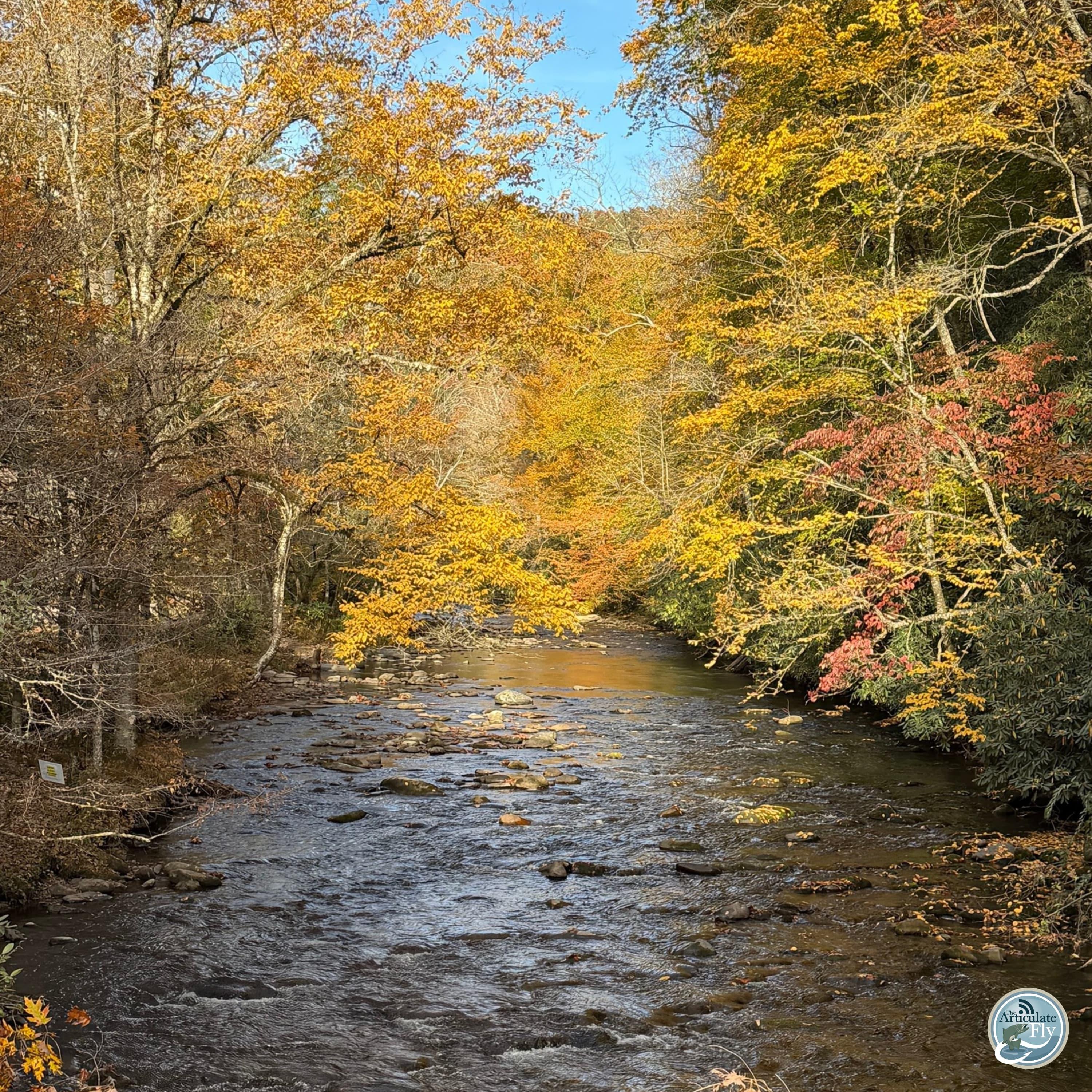
Fewer Fish, Smarter Fishing: Mac Brown on Moving, Reading Water and October Caddis
The Articulate Fly · 12 ноября 2026 г. · 12 мин
Episode Overview On this Casting Angles episode of The Articulate Fly, host Marvin Cash checks in with Mac Brown, fly casting instructor at Mac Brown Fly Fish in Bryson City, North Carolina, on the start of the Delayed Harvest season in western North Carolina. With the main hatchery in Brevard offline and fish kills at the other hatcheries, stocking started a month late and at roughly a third of normal numbers, which changes how anglers should find and fish stocked trout this fall. Mac explains what he is seeing on the Tuckasegee River around Bryson City and Webster, where water temperatures in the low 50s sit in an ideal range but recent rains pushed flows to about 1,600 CFS and kept wading anglers out of the river. Rather than settling into the slow, deep water typical of the season, the fish are holding in knee- to waist-deep runs with three to four feet per second of current, feeding on black caddis and Blue-Winged Olives. Mac covers why a chartreuse mop fished like a wet fly and pulled back upstream has been his most productive low-light approach, how to grid unfamiliar water with a wide probe before tightening up and why anglers should keep moving until they find a pod, then take a few fish and leave it for others. He also takes the conversation into Great Smoky Mountains National Park, where he probes pool tailouts during the October caddis hatch for better brown trout, and previews his early 2027 fly fishing show schedule, starting in Athens, Georgia and Marlborough, Massachusetts. Key Takeaways How to locate reduced numbers of Delayed Harvest trout by covering water quickly until you find a pod rather than camping on a single spot. Why stocked trout on the Tuckasegee River are holding in knee- to waist-deep current moving three to four feet per second this fall and keying on black caddis and Blue-Winged Olives. How to fish a chartreuse mop like a wet fly, swinging it and pulling it back upstream, for low-light success in fast water late in the day. How to grid new water with a wide probe of casts spaced six to eight feet apart, then tighten the grid once you find fish. When to shift to pool tailouts on Great Smoky Mountains National Park streams to target better-quality brown trout during the October caddis hatch. Why checking live flow and water temperature data before you go matters, since wading becomes impractical when Bryson City flows approach 1,800 CFS. Techniques & Gear Covered Mac's fall Delayed Harvest approach centers on matching black caddis and Blue-Winged Olive activity in faster current, then falling back on attractor patterns when no hatch is evident. His standout pattern is a chartreuse mop, which shows up well in fast water when the sun angle drops and can be tight-lined or fished under an indicator, though his most productive method has been swinging it like a wet fly and pulling it back upstream. Mac and Marvin also break down systematic gridding: probing new water with casts spaced six to eight feet apart, tightening the grid once fish show up and still giving low-probability water a few casts. On wild streams, Mac stands in the riffle below a pool and probes its bottom eighth, managing the challenge of laying line across fast water while the fly drifts into the slower tailout. Locations & Species This episode focuses on fall fly fishing for stocked trout on the Tuckasegee River's Delayed Harvest water around Bryson City and Webster in western North Carolina, where reduced stocking has spread fewer fish through the system. Late fall conditions include frost, water temperatures in the low 50s and elevated flows after a couple of inches of rain, with Bryson City near 1,600 CFS and Webste